Showing posts with label U.S.. Show all posts

Friday, 18 March 2011

2012 Ford C-Max

We have already driven the three-row Grand C-Max in Europe and liked what we experienced -- basically a mini-minivan with some clever packaging -- but the cars we drove didn't have the American powertrains installed, perhaps because details of the U.S. engine lineup had not yet been ironed out.

Two Fours and 5+2

Now we know that the base engine is a 2.5-liter four-cylinder making 168 hp and 167 lb-ft of torque. The optional engine is a 1.6-liter EcoBoost (that means it's turbocharged and direct-injected, for those who haven't received the message) four that puts out the same horsepower as the 2.5 on regular gas, but cranks it up to 180 hp on premium; torque using either fuel is 173 ft-lbs. Ford promises better fuel economy for the more expensive and sometimes-more-powerful EcoBoost four, thereby justifying its higher cost. (A similar scheme is planned for the all-new Explorer.) No matter which powerplant is fitted, a six-speed automatic transmission is the only choice.

The interior has the same "5+2" seating as Europe's Grand C-Max. The second row's middle seat can be folded and stowed inside the seat to its right, creating an aisle for easy access to two small seats in the third row. Buyers will be able to choose a third-row-delete option for 5+0 seating. Sync and MyFord Touch will be available, as will a rearview camera, active park assist, and Curve Control, an evolution of stability control first seen on the new Explorer.

Sunday, 13 March 2011

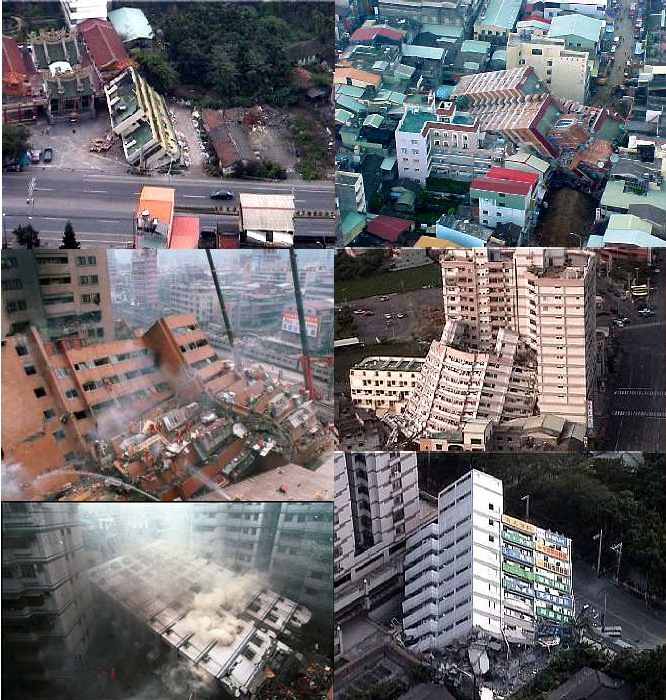
Japanese quake could impact U.S. nuclear projects

The nuclear crisis in Japan is already affecting nuclear energy politics in the United States as nuclear reactors around the country come up for license renewal and energy companies seek to build new facilities, our Donna Leinwand reports.

Leinwand says Rep. Edward Markey, D-Mass., a member of the House Energy and Commerce Committee, sent a letter to the chairman of the Nuclear Regulatory Commission saying the disaster in Japan highlights "both the fragility of nuclear power plants and the potential consequences associated with a radiological release caused by earthquake-related damage."

Markey asked the NRC, which has sent experts to Japan, whether U.S. nuclear plants could withstand an earthquake or tsunami of the same magnitude of the Japanese quake.

Markey last week had asked the NRC to postpone approving Westinghouse's design for a new nuclear reactor, AP1000, until the company can address safety concerns in the event of an earthquake, Leinwand reports.

"If the NRC approves the AP1000, then it may have widespread use throughout the United States," Markey wrote. "Taxpayer dollars should not be spent on reactors that could be at risk of suffering a catastrophic core meltdown in the event of an aircraft strike or major earthquake."

Last year Markey asked for an investigation into whether the NRC has adequate earthquake standards for reactors.